
When dropping an index from a partitioned YSQL table, you might encounter an unexpected error like this:
					ERROR:  cannot drop index app.event_history_search_idx
        because column event_timestamp of table
        app.event_history_p2027_07 requires it

HINT:  You can drop column event_timestamp of table
       app.event_history_p2027_07 instead.
Normally, an index depends on the table columns used in its definition. In this example, the error indicates the opposite: YugabyteDB believes that the partition’s event_timestamp column depends on the index.
YSQL records object dependencies in the pg_depend system catalog and partition hierarchy information in catalogs such as pg_inherits. YugabyteDB lists both catalogs as part of its supported YSQL system catalog metadata.
YugabyteDB indexes are distributed objects implemented similarly to tables. They are split into tablets and distributed across the nodes in the cluster. When an index is created recursively on a partitioned table, YSQL creates corresponding indexes for its partitions.
DROP INDEX ... CASCADE in response to this error. In YSQL, CASCADE removes objects that transitively depend on the index. Because the dependency currently points from the column to the index, a cascading drop could instruct YSQL to remove the column and potentially other dependent objects.What Does the Error Mean?
The error is strong evidence of an unexpected or inverted catalog dependency. However, the error message alone does not reveal how that dependency was created.
The expected and unexpected dependency directions look like this:
| Dependent Object | Referenced Object | Interpretation |
| Index | Table column | Normal: the index requires the column. |
| Table column | Index | Unexpected: dropping the index is interpreted as requiring the column to be dropped. |
In pg_depend:
- ●
objididentifies the dependent object. - ●
objsubididentifies a dependent column when its value is greater than zero. - ●
refobjididentifies the referenced object. - ●
refobjsubididentifies a referenced column when its value is greater than zero. - ●
deptypedescribes the dependency behavior.
A pg_depend row therefore means that the referenced object cannot be removed without YSQL considering the effect on the dependent object.
How to Safely Investigate and Resolve the Issue
Before attempting to remove the index, determine how it participates in the partition hierarchy and confirm the direction of the dependency.
The following steps will help you:
- ● Identify whether the target is a parent, child, or standalone index.
- ● Inspect the dependency recorded in
pg_depend. - ● Preserve the existing index and partition definitions.
- ● Isolate the affected partition.
- ● Retry the index removal without using
CASCADE. - ● Verify the partition and index hierarchy afterward.
Step 1: Identify the Index’s Role
Before changing the partition hierarchy, determine whether the target is:
- ● A parent partitioned index.
- ● A physical index attached to a parent partitioned index.
- ● A standalone index that is not currently attached to a parent partitioned index.
Run:
					SELECT
    idx.oid::regclass       AS index_name,
    idx.relkind             AS relation_kind,
    idx.relispartition      AS is_partition,
    pi.indrelid::regclass   AS indexed_table,
    inh.inhparent::regclass AS parent_index
FROM pg_class AS idx
JOIN pg_index AS pi
  ON pi.indexrelid = idx.oid
LEFT JOIN pg_inherits AS inh
  ON inh.inhrelid = idx.oid
WHERE idx.oid = 'app.event_history_search_idx'::regclass;
| Result | Index Role | Meaning |
relation_kind = 'I' | Parent partitioned index | The logical index defined on the partitioned table. |
relation_kind = 'i' and parent_index is populated | Attached partition index | An index belonging to one table partition and attached to the parent partitioned index. |
relation_kind = 'i' and parent_index is null | Standalone index | The index is not currently part of a parent partitioned-index hierarchy. |
YSQL stores table and index hierarchy relationships in pg_inherits. Creating an index on a partitioned table normally recurses across its partitions unless the ONLY keyword is used.
Step 2: Inspect the Dependency in Both Directions
Use pg_describe_object to make each dependency easier to interpret:
					WITH target_index AS (
    SELECT
        'app.event_history_search_idx'::regclass::oid AS index_oid
)
SELECT
    d.deptype,
    pg_describe_object(
        d.classid,
        d.objid,
        d.objsubid
    ) AS dependent_object,
    pg_describe_object(
        d.refclassid,
        d.refobjid,
        d.refobjsubid
    ) AS referenced_object
FROM pg_depend AS d
CROSS JOIN target_index AS target
WHERE (
        d.classid = 'pg_class'::regclass
    AND d.objid = target.index_oid
      )
   OR (
        d.refclassid = 'pg_class'::regclass
    AND d.refobjid = target.index_oid
      )
ORDER BY
    dependent_object,
    referenced_object;
Look for a row resembling:
					dependent_object:
column event_timestamp of table app.event_history_p2027_07

referenced_object:
index app.event_history_search_idx
That result confirms that the dependency points from the table column to the index rather than from the index to the column.
You can isolate the suspected dependency with:
					SELECT
    d.*,
    a.attname AS dependent_column
FROM pg_depend AS d
JOIN pg_attribute AS a
  ON a.attrelid = d.objid
 AND a.attnum = d.objsubid
WHERE d.classid = 'pg_class'::regclass
  AND d.refclassid = 'pg_class'::regclass
  AND d.objid = 'app.event_history_p2027_07'::regclass
  AND a.attname = 'event_timestamp'
  AND d.refobjid = 'app.event_history_search_idx'::regclass;
Step 3: Capture the Existing Definitions
Before detaching or dropping anything, save the index definition:
					SELECT pg_get_indexdef(
    'app.event_history_search_idx'::regclass
);
Capture the exact partition boundary:
					SELECT
    c.oid::regclass AS partition_name,
    pg_get_expr(
        c.relpartbound,
        c.oid
    ) AS partition_bound
FROM pg_class AS c
WHERE c.oid = 'app.event_history_p2027_07'::regclass;
Also save the definitions shown by ysqlsh:
					\d+ app.event_history

\d+ app.event_history_p2027_07
pg_get_expr. The partition key might use date, timestamp, timestamptz, multiple columns, or expressions. YSQL supports range, list, and hash partitioning, and partition keys can contain columns or expressions. Range bounds are inclusive at the lower boundary and exclusive at the upper boundary.
Step 4: Detach the Affected Partition
Schedule the operation during a maintenance window and pause any automated partition-management process that could modify the same partition hierarchy.
Detach the affected partition:
					ALTER TABLE app.event_history
DETACH PARTITION app.event_history_p2027_07;
YSQL retains the detached partition and its data as a standalone table outside the parent’s partition hierarchy.
Confirm that the table is no longer attached:
					SELECT
    inhrelid::regclass  AS partition_name,
    inhparent::regclass AS parent_name
FROM pg_inherits
WHERE inhrelid = 'app.event_history_p2027_07'::regclass;
The query should return no table-partition relationship for the detached table.
After detaching the table, rerun the index-role query from Step 1 and the dependency query from Step 2. Because the procedure is addressing unexpected catalog metadata, verify the resulting index relationship rather than assuming that the detach corrected it.
Step 5: Retry the Index Drop
The correct next action depends on the index role identified in Step 1.
| Index Role | Before Dropping It | Impact |
| Attached partition index | Verify that it is no longer attached to the parent partitioned index after detaching the table. | Removes the index from the detached table only. |
| Parent partitioned index | Confirm that you intend to remove the index hierarchy from every partition that remains attached. | Can remove the corresponding indexes from all remaining attached partitions. |
| Standalone index | Confirm that the unexpected dependency no longer appears in pg_depend. | Removes only the standalone distributed index. |
Once you have verified the index role and intended impact, retry the drop without CASCADE:
DROP INDEX app.event_history_search_idx;
RESTRICT is the default behavior for DROP INDEX. YSQL will refuse the drop if an unresolved dependency still requires the index.
CASCADE and do not begin deleting rows from pg_depend. The issue requires a catalog-level investigation. Step 6: Reattach the Partition
Use the exact partition boundary captured earlier.
For a monthly July 2027 partition, the command might look like this:
					ALTER TABLE app.event_history
ATTACH PARTITION app.event_history_p2027_07
FOR VALUES FROM ('2027-07-01')
         TO   ('2027-08-01');
Replace the example dates with the original partition boundary.
YSQL allows a regular table with a compatible schema to be attached to a partitioned table. After the attach operation, inspect both the table hierarchy and index hierarchy rather than assuming that every index relationship has been restored.
Step 7: Verify the Repair
Confirm that the table is attached again:
					SELECT
    inhrelid::regclass  AS partition_name,
    inhparent::regclass AS parent_name
FROM pg_inherits
WHERE inhrelid = 'app.event_history_p2027_07'::regclass;
Inspect the table and partition definitions:
					\d+ app.event_history

\d+ app.event_history_p2027_07
Check whether the original index still exists:
					SELECT to_regclass(
    'app.event_history_search_idx'
) AS index_name;
A null result means that the index no longer exists.
Rerun the dependency query from Step 2 and confirm that no row shows event_timestamp as dependent on the removed index.
If a corresponding index still exists or was recreated, optionally validate its data against the base relation:
					SELECT yb_index_check(
    'app.event_history_search_idx'::regclass
);
yb_index_check() checks a YugabyteDB index for missing, spurious, or inconsistent index rows. When executed against a partitioned index, it recursively checks its partition indexes. It validates index data consistency, not the correctness of pg_depend metadata.
What If DETACH PARTITION Fails?
If the detach operation produces the same dependency error, stop and collect diagnostic information for Yugabyte Support.
Capture the YugabyteDB version:
SELECT version();
Capture the relevant YSQL relation metadata:
					SELECT
    c.oid,
    c.oid::regclass AS relation_name,
    c.relkind,
    c.relispartition
FROM pg_class AS c
WHERE c.oid IN (
    'app.event_history'::regclass,
    'app.event_history_p2027_07'::regclass,
    'app.event_history_search_idx'::regclass
);
Capture all dependencies involving the index:
					SELECT
    d.*,
    pg_describe_object(
        d.classid,
        d.objid,
        d.objsubid
    ) AS dependent_object,
    pg_describe_object(
        d.refclassid,
        d.refobjid,
        d.refobjsubid
    ) AS referenced_object
FROM pg_depend AS d
WHERE (
        d.classid = 'pg_class'::regclass
    AND d.objid = 'app.event_history_search_idx'::regclass
      )
   OR (
        d.refclassid = 'pg_class'::regclass
    AND d.refobjid = 'app.event_history_search_idx'::regclass
      )
ORDER BY
    dependent_object,
    referenced_object;
Include the following information with the support case:
- ● The complete error message.
- ● The YugabyteDB version.
- ● The index definition.
- ● The original partition boundary.
- ● The parent table and partition
\d+output. - ● The complete
pg_dependoutput. - ● Recent index, partition, upgrade, restore, or maintenance operations.
- ● Relevant YSQL and YB-TServer logs.
Should You Delete the pg_depend Row Manually?
Directly deleting the suspected row from pg_depend might appear to resolve the immediate error, but pg_depend controls how YSQL manages object lifecycles and dependent DDL operations.
Deleting the wrong row can create additional catalog inconsistencies, allow an object to be removed while another object still requires it, or leave incorrect metadata behind.
YugabyteDB also maintains catalog metadata and catalog caches across its distributed architecture, making an unsupported catalog modification especially risky. YugabyteDB documents pg_depend as a system catalog used to preserve dependency integrity.
DELETE FROM pg_depend command. Any direct YSQL system-catalog repair should be developed for the exact YugabyteDB version and catalog state, validated against a backup, and performed only under the direction of Yugabyte Support or engineering. Final Takeaway
When YugabyteDB reports that a partition column requires an index:
- 1. Do not drop the column.
- 2. Do not use
DROP INDEX ... CASCADE. - 3. Confirm the dependency direction in
pg_depend. - 4. Identify whether the index is a parent partitioned index, an attached partition index, or a standalone index.
- 5. Save the index definition and exact partition boundary.
- 6. Detach the affected partition during a controlled maintenance window.
- 7. Verify the resulting index hierarchy.
- 8. Retry the index drop without
CASCADE. - 9. Reattach the partition using its original boundary.
- 10. Escalate the issue if the dependency remains or the detach operation fails.
The safest response to an unexpected YSQL catalog dependency is to reduce the scope of the operation… not to make the drop more aggressive.
Resources
| Resource | Description |
| YugabyteDB System Catalogs | Lists YSQL system catalogs, including pg_depend, pg_inherits, and pg_partitioned_table. |
| YugabyteDB Table Partitioning | Explains YSQL partitioned tables, partition boundaries, indexes, and attaching or detaching partitions. |
| YugabyteDB CREATE INDEX | Documents distributed YSQL indexes and recursive index creation on partitioned tables. |
| YugabyteDB DROP INDEX | Documents DROP INDEX, RESTRICT, and CASCADE behavior in YSQL. |
| YugabyteDB Secondary Indexes | Explains how YugabyteDB indexes are implemented as distributed objects split into tablets. |
| YugabyteDB yb_index_check() | Describes the YugabyteDB utility for validating index data against its base relation. |
Have Fun!
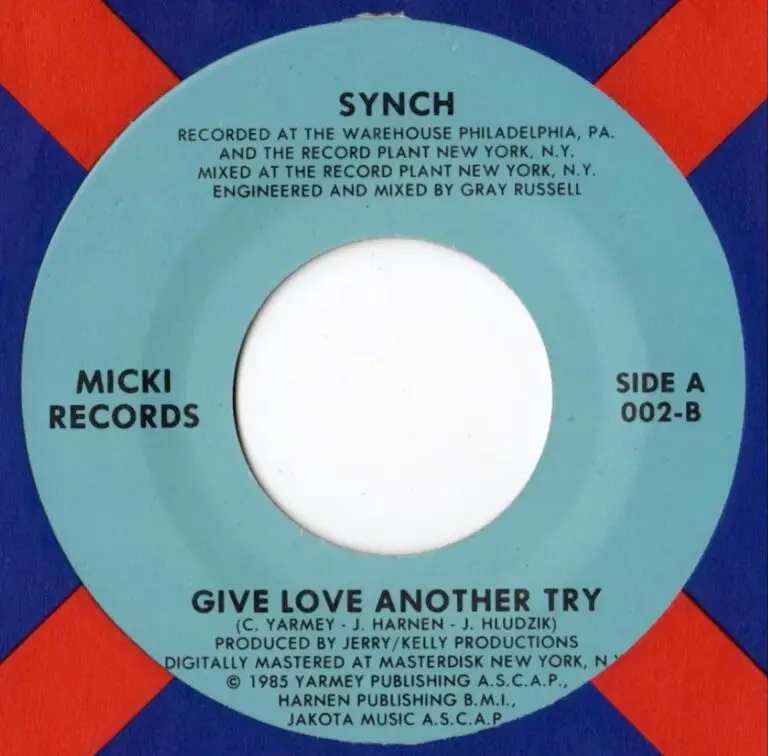
YouTube is great for videos, but it’s also an amazing place to rediscover obscure songs and records you haven’t heard in decades.
Here’s a perfect example: “Give Love Another Try” by Synch, a Pennsylvania band featuring Jimmy Harnen, who later had a hit with “Where Are You Now?” in the late ’80s. This was a locally released record from before the band signed with Columbia Records in 1986.
I first heard of Synch during my freshman year of college, when a girl I met from Scranton introduced me to the band. Hearing this again after all these years brings back some great memories. Very cool!