YugabyteDB YSQL supports PostgreSQL-style table inheritance using the INHERITS keyword—a powerful tool to streamline schema design and avoid redundancy
Why Use Table Inheritance?
DRY Schema: Share common columns and constraints among related tables.
Polymorphism: Perform queries across parent and children using ONLY or blanket selects.
Cleaner Maintenance: Updating shared columns happens in one place… your parent table.
Real-World Example: Pet Management App.
Let’s build a database for a veterinary clinic tracking various pets:
Step 1: Create the Parent Table
					CREATE TABLE pets (
  pet_id        UUID PRIMARY KEY,
  name          TEXT NOT NULL,
  admitted_date DATE NOT NULL DEFAULT CURRENT_DATE,
  is_vaccinated BOOLEAN NOT NULL DEFAULT FALSE,
  CHECK (name <> '')
);
Step 2: Define Child Tables
DOGS Table:
					CREATE TABLE dogs (
  breed     TEXT NOT NULL,
  bark_level INTEGER NOT NULL CHECK (bark_level BETWEEN 1 AND 10),
  PRIMARY KEY (pet_id, breed)
) INHERITS (pets);
CATS Table:
					CREATE TABLE cats (
  color         TEXT NOT NULL,
  night_vision  BOOLEAN NOT NULL DEFAULT TRUE,
  PRIMARY KEY (pet_id)
) INHERITS (pets);
All dog and cat records automatically include pet_id, name, and other common columns, not needing to redefine them.
Sample Data Inserts
Let’s populate the pets, dogs, and cats tables with some example data.
Insert into Parent Table (pets):
					-- A generic pet (not a dog or cat)
INSERT INTO pets (pet_id, name, is_vaccinated)
VALUES ('00000000-0000-0000-0000-000000000001', 'Goldie', TRUE);
Shared structure: Both dogs and cats inherit automatic columns and constraints from pets, like is_vaccinated and the name <> '' check.
Independent column rules: Child tables can add extra fields and unique constraints.
Polymorphic queries: Query all pets together—even if they exist only in a child table.
Return all entries across pets, dogs, and cats:
SELECT * FROM pets;
Example:
					yugabyte=# SELECT * FROM pets ORDER BY pet_id;
                pet_id                |   name   | admitted_date | is_vaccinated
--------------------------------------+----------+---------------+---------------
 00000000-0000-0000-0000-000000000001 | Goldie   | 2025-07-08    | t
 00000000-0000-0000-0000-000000000002 | Rex      | 2025-07-08    | t
 00000000-0000-0000-0000-000000000003 | Buddy    | 2025-07-08    | f
 00000000-0000-0000-0000-000000000004 | Whiskers | 2025-07-08    | t
 00000000-0000-0000-0000-000000000005 | Luna     | 2025-07-08    | f
(5 rows)
To focus just on base table data, use:
SELECT * FROM ONLY pets;
Example:
					yugabyte=# SELECT * FROM ONLY pets;
                pet_id                |  name  | admitted_date | is_vaccinated
--------------------------------------+--------+---------------+---------------
 00000000-0000-0000-0000-000000000001 | Goldie | 2025-07-08    | t
(1 row)
Notes
Starting in YugabyteDB 2025.1, the Table Inheritence feature will be enabled by default.
In early version, enable Table Inheritence via the T-Server gFlag ysql_enable_inheritance
Check the official YugabyteDB doc pages for tips on handling Schema changes and current Limitions.
Final thoughts
Table inheritance in YugabyteDB’s YSQL is a clean, DRY, and powerful schema design pattern—especially when you manage overlapping entities. Once your foundation (pets) is set, child-specific tables like dogs and cats inherit valuable defaults and constraints, while still allowing specialization and polymorphic querying.
Have Fun!
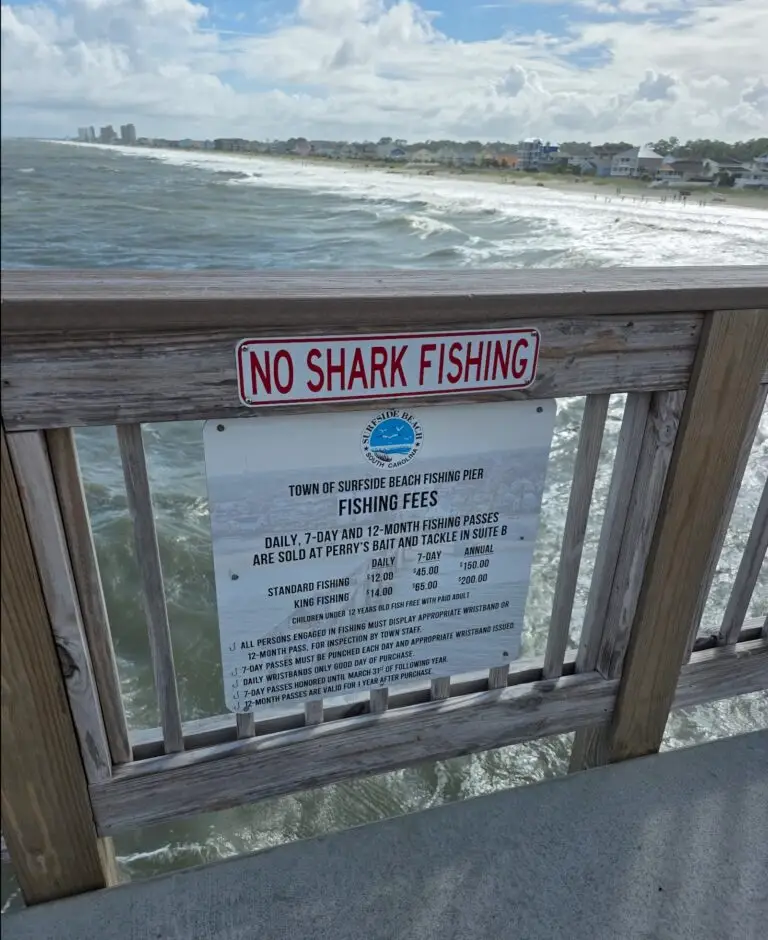
While visiting Myrtle Beach over the 4th of July weekend, I was all set on shark fishing... until I saw this sign!